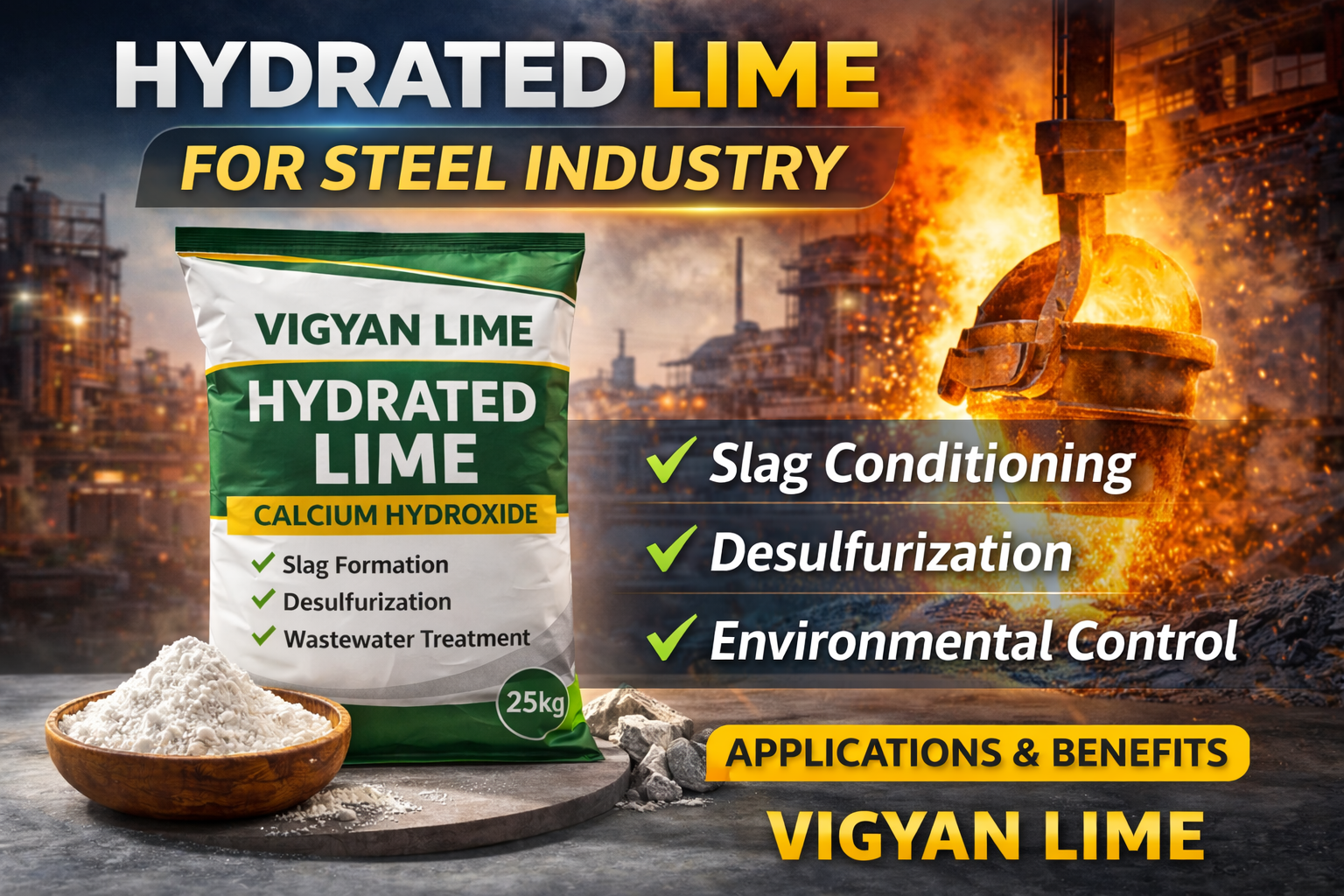
Hydrated Lime for Steel Industry plays a crucial role in improving steel quality, controlling impurities, and ensuring smooth metallurgical operations. In modern steel plants, calcium-based materials are essential for refining, slag conditioning, gas treatment, and wastewater neutralization.
Hydrated Lime, also known as Calcium Hydroxide (Ca(OH)₂), is widely used in integrated steel plants, mini steel plants, induction furnaces, and secondary metallurgy units.
India is one of the largest steel producers in the world, and consistent supply of high-purity hydrated lime is critical for maintaining production efficiency and meeting environmental compliance standards.
What is Hydrated Lime?
Hydrated Lime is produced by adding water to Quick Lime (Calcium Oxide).
Chemical Reaction:
CaO + H₂O → Ca(OH)₂
It is a fine white alkaline powder with strong reactivity. Due to its high alkalinity and chemical stability, it is suitable for metallurgical and environmental applications in steel plants.
Why Hydrated Lime is Important in the Steel Industry
Steel production involves high-temperature processes that generate impurities such as:
-
Sulfur
-
Phosphorus
-
Silica
-
Heavy metals
-
Acidic gases
Hydrated lime helps in controlling these impurities and improving overall steel quality.
Major Applications of Hydrated Lime in Steel Industry
1. Slag Formation and Conditioning
During steelmaking, slag plays an important role in removing impurities from molten metal.
Hydrated lime contributes to:
-
Formation of basic slag
-
Removal of silica and phosphorus
-
Improved slag fluidity
-
Better impurity separation
Proper slag chemistry improves steel purity and reduces defects.
2. Desulfurization Process
Sulfur negatively affects steel strength and weldability. Hydrated lime is used in desulfurization to:
-
React with sulfur compounds
-
Reduce sulfur content in molten iron
-
Improve final steel quality
Lower sulfur levels enhance mechanical properties.
3. pH Control in Steel Plant Wastewater
Steel plants generate acidic wastewater containing:
-
Iron particles
-
Heavy metals
-
Chemical residues
Hydrated lime neutralizes acidic water and raises pH levels, making wastewater safe for treatment and discharge.
4. Flue Gas Treatment
Steel furnaces emit gases such as:
-
Sulfur dioxide
-
Acidic fumes
Hydrated lime is used in gas treatment systems to neutralize harmful emissions and meet pollution control standards.
5. Effluent Treatment Plants (ETP)
In steel industry ETP systems, hydrated lime is used for:
-
Heavy metal precipitation
-
Sludge conditioning
-
Chemical neutralization
It ensures compliance with environmental regulations.
6. Sinter Plant Operations
In sinter plants, lime helps improve agglomeration properties and supports better blast furnace performance.
Benefits of Using Hydrated Lime in Steel Manufacturing
Improved Steel Quality
Removes impurities such as sulfur and phosphorus, leading to stronger and more durable steel.
Enhanced Slag Efficiency
Helps in forming stable and reactive slag for better impurity removal.
Environmental Compliance
Supports pollution control by neutralizing acidic gases and wastewater.
Cost Efficiency
Compared to other alkaline chemicals, hydrated lime is economical and widely available.
Operational Stability
Improves process control and consistency in steel plants.
Technical Properties Required for Steel Industry Grade Hydrated Lime
Steel plants require high-quality hydrated lime with:
-
High Ca(OH)₂ purity
-
Low silica content
-
Fine particle size
-
High reactivity
-
Low moisture content
Consistent chemical composition ensures predictable metallurgical performance.
Hydrated Lime vs Quick Lime in Steel Industry
Quick Lime (CaO) is mainly used in primary steelmaking for slag formation.
Hydrated Lime (Ca(OH)₂) is more commonly used for:
-
Environmental applications
-
Gas treatment
-
Wastewater treatment
-
Secondary processes
Both materials play important but different roles.
Environmental and Sustainability Benefits
Hydrated lime supports sustainable steel production by:
-
Reducing harmful emissions
-
Neutralizing acidic waste
-
Lowering environmental impact
-
Supporting regulatory compliance
It plays a vital role in green steel initiatives.
Challenges Without Proper Lime Quality
Using low-quality hydrated lime may result in:
-
Poor slag formation
-
Incomplete desulfurization
-
Higher chemical consumption
-
Increased operational cost
-
Equipment scaling issues
Therefore, selecting a reliable manufacturer is critical.
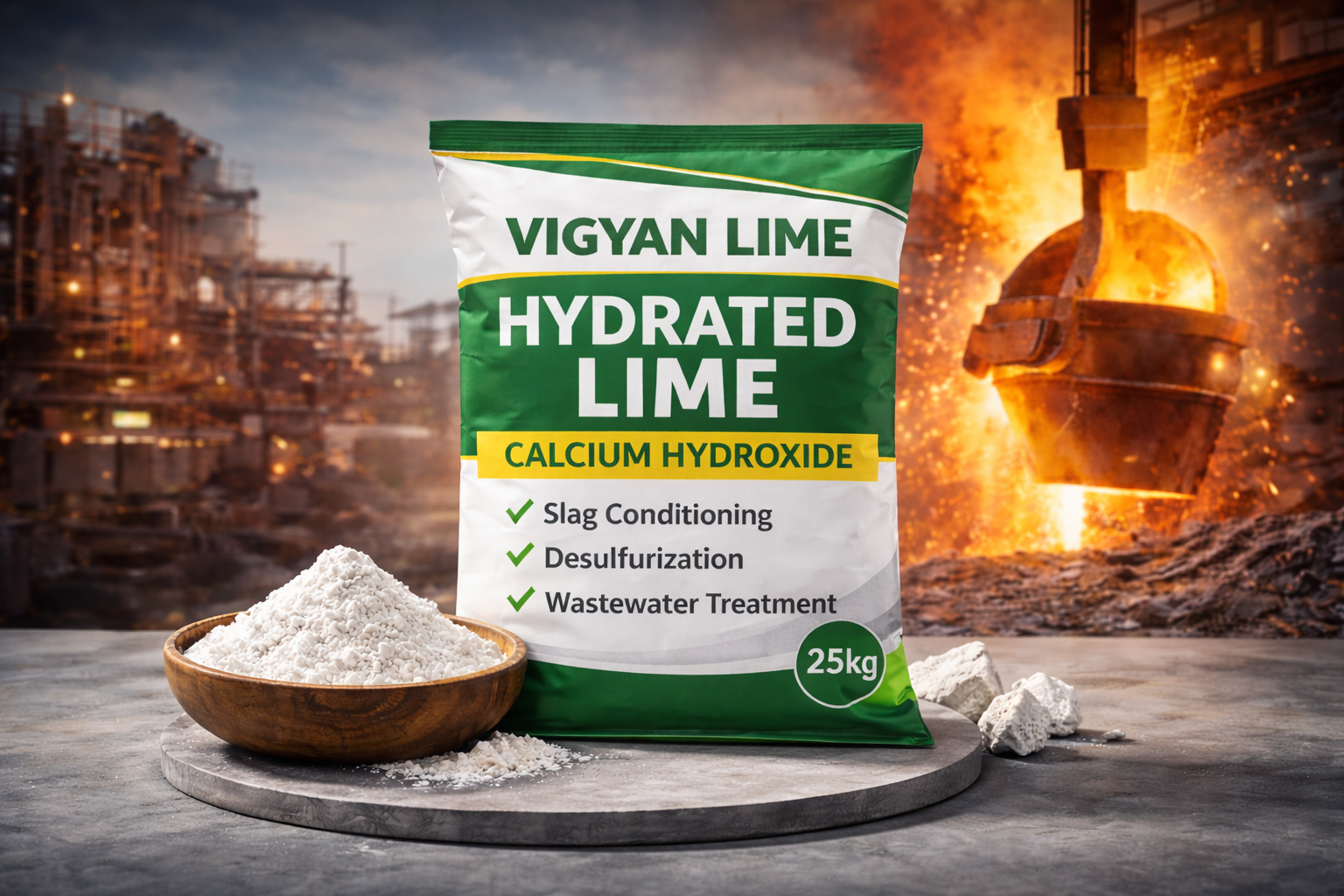
Why Choose Vigyan Lime for Steel Industry Supply?
Vigyan Lime manufactures high-purity hydrated lime suitable for steel industry applications.
With advanced production processes and strict quality control, Vigyan Lime ensures:
-
Consistent Ca(OH)₂ purity
-
Reliable supply chain
-
Bulk delivery capability
-
Technical support
Manufacturing Units
Jodhpur & Nagaur (Rajasthan)
Udaipur (Rajasthan)
Haldwani (Uttarakhand)
Sataun (Himachal Pradesh)
These strategically located facilities ensure efficient supply across North, West, and Central India.
Industries Served
-
Integrated steel plants
-
Secondary steel units
-
Rolling mills
-
Sinter plants
-
Induction furnace units
-
Infrastructure steel producers
Packaging Options
25 kg bags
50 kg bags
Bulk supply
Customized packaging
Storage and Handling
-
Store in dry conditions
-
Avoid moisture exposure
-
Ensure dust control measures
-
Follow industrial safety protocols
Frequently Asked Questions
What is the role of hydrated lime in steel production?
It helps in impurity removal, slag conditioning, and wastewater neutralization.
Is hydrated lime used in desulfurization?
Yes, it reduces sulfur content in molten iron and steel.
Why is purity important in steel industry lime?
High purity ensures efficient reactions and better steel quality.
Can hydrated lime help in pollution control?
Yes, it neutralizes acidic gases and wastewater.
Hydrated Lime for Steel Industry is a critical material that supports metallurgical efficiency, impurity removal, environmental compliance, and cost control.
From slag conditioning to wastewater treatment, hydrated lime enhances steel quality and plant performance. Selecting high-purity material from a trusted manufacturer ensures consistent and reliable results.
Vigyan Lime supplies premium-grade hydrated lime suitable for steel plants across India.
For bulk orders and technical specifications, contact:
Head Office
G-37, Race Course
Dehradun, Uttarakhand 248001
Email: info@vigyanlime.com
Phone:
+91-95685-01110
+91-95688-01110
+91-98370-55678